
For Pakistani business owners, startup founders, and marketing managers, the difference between AEO, GEO, and SEO can feel harder to understand than it should. The terms are used constantly, but even search professionals do not fully agree on where one ends and another begins. Unboxed helps businesses make sense of this changing landscape by connecting traditional search visibility with direct answers and AI-powered discovery, without chasing every new acronym as if it requires a completely separate strategy.
Here is the practical explanation:
- SEO helps webpages rank in traditional search results.
- AEO helps content become a direct answer.
- GEO helps brands and content appear within generative AI responses.
The three disciplines overlap heavily. In many cases, the same high-quality page can support all three.
The Confusion Around These Three Terms
AEO, GEO, and SEO are sometimes presented as three completely separate marketing disciplines. That distinction is useful for explaining their different goals, but it is not entirely accurate.
There is no universally accepted definition that creates a clean boundary between them. An article can rank in Google, appear in a featured snippet, support an AI Overview, and be cited by a generative platform at the same time.
Google’s official position makes this overlap particularly clear. Google states that its generative search experiences, including AI Overviews and AI Mode, rely on its core search ranking and quality systems. It also says that established SEO best practices remain relevant to visibility in these experiences.
Google acknowledges that terms such as AEO and GEO are widely used, but it considers optimization for its generative search experiences to remain part of SEO.
That does not make the newer labels useless. They help businesses separate three different visibility outcomes.
| Strategy | Primary Goal | Typical Outcome |
| SEO | Improve webpage rankings | Organic listings and clicks |
| AEO | Become the selected answer | Snippets, concise answers and AI summaries |
| GEO | Appear within generative responses | Citations, references and brand mentions |
Early in this discussion, it is worth understanding what AEO actually means because AEO is not a replacement for traditional optimization. It is a way of adapting content to search experiences that increasingly answer questions directly.
What SEO Focuses On
SEO focuses on making webpages accessible, relevant, trustworthy, and competitive in traditional search engine results.
Its usual objective is to rank a page for searches connected to a business, product, service, or informational topic. The ranking then gives the user an opportunity to click through to the website.
For example, when someone searches for “corporate video production company in Pakistan,” SEO influences which agency pages, business listings, videos, and articles appear prominently.
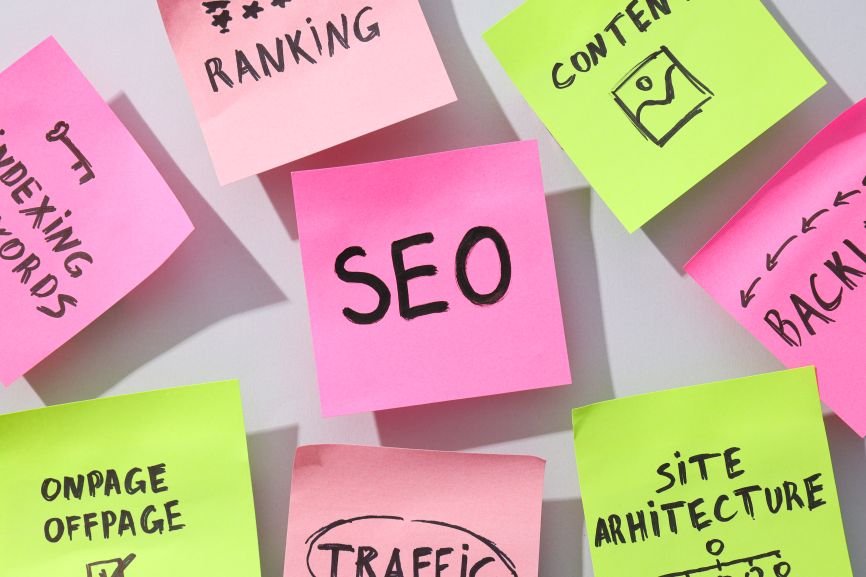
A complete SEO strategy can include:
- Search-intent and keyword research
- Technical site health
- Crawling and indexing
- Website structure and internal linking
- Helpful, original content
- Backlink and authority development
- Page experience and mobile usability
- Local search optimization
- Organic performance measurement
SEO remains the foundation of modern search visibility. Search engines and AI-powered discovery systems still need content they can access, understand, retrieve, and evaluate.
A business with a technically weak website cannot fix the problem by adding a few FAQ sections. If its service pages are unclear, important content is not indexed, or the brand has little authority, its visibility will remain limited across traditional and AI-assisted search.
SEO is also still commercially important in Pakistan. Customers routinely use Google when comparing agencies, clinics, universities, software providers, restaurants, property companies, and professional services.
The major change is that ranking no longer guarantees a click. Search engines can answer many queries directly on the results page. That creates the need for AEO.
What AEO Focuses On
AEO stands for Answer Engine Optimization. It focuses on making information clear, reliable, and easy for search systems to present as a direct answer.
Traditional SEO asks:
How can this page rank for the query?
AEO adds another question:
How can this page provide the clearest answer to the query?
Answer-focused visibility can include:
- Featured snippets
- People Also Ask results
- Voice assistant responses
- Concise search-result answers
- Google AI Overviews
- Other AI-assisted search experiences
Google defines featured snippets as special results in which the descriptive extract appears before the standard webpage link. Featured snippets can also appear within related-question sections, commonly known as People Also Ask.
AEO content usually performs best when it provides the answer quickly and then expands on it. Useful formats include:
- Concise definitions
- Question-based headings
- Numbered processes
- Genuine comparison tables
- Clear bullet lists
- Short summaries followed by deeper explanations
- FAQs based on real customer concerns
Consider an article about corporate video pricing. A weak version might spend several paragraphs discussing the importance of video before addressing cost. A stronger answer-focused version would first explain the typical pricing factors, then provide the detail needed to understand them.
Effective AEO may involve:
- Answering the main query near the beginning
- Matching headings to real search questions
- Giving a direct response before adding context
- Organizing processes into logical steps
- Supporting claims with credible evidence
- Demonstrating practical expertise
- Keeping company and author information accurate
- Using relevant structured data where Google supports it
Structured data can help search engines understand eligible content, but it does not guarantee a featured result, rich result, or AI citation. Google also warns that websites do not need special AI markup or files to appear in its generative search features.
Businesses targeting Google’s AI-generated search experiences should learn how to optimize specifically for Google AI Overviews. The goal is not to divide every paragraph into artificial content blocks. It is to make genuinely useful information clear enough for both people and search systems to understand.
What GEO Focuses On
GEO stands for Generative Engine Optimization. It focuses on improving the likelihood that a brand, webpage, idea, or source will be included in a response produced by a generative AI system.
The term became widely known following the publication of the 2023 research paper “GEO: Generative Engine Optimization.” The researchers described generative engines as systems that gather and synthesize information from multiple sources before producing a response.
GEO may target visibility in platforms and experiences such as:
- ChatGPT
- Perplexity
- Gemini
- Copilot
- AI-powered research tools
- Generative search interfaces
Possible GEO outcomes include:
- A citation linking to the website
- A brand mention
- A product or service recommendation
- A statistic attributed to the business
- Inclusion in an AI-generated comparison
- Accurate use of the company’s expertise
The distinction from SEO is mainly the format of the result. SEO typically aims for a ranked webpage. GEO aims for inclusion within a synthesized response.
However, generative platforms can still display clickable links, citations, and source cards. The goal is not merely to replace clicks with mentions. It is to become one of the sources or entities that help shape the response.
Perplexity, for example, states that its responses include citations and links to original sources. Other platforms may show sources differently depending on the query, product, model, location, and whether live web retrieval is used.
GEO activities can include:
- Publishing original research and expert insights
- Developing strong topical authority
- Providing specific, verifiable information
- Making important pages accessible to crawlers
- Strengthening brand entity consistency
- Earning mentions from credible third-party sources
- Maintaining accurate business profiles
- Building useful product and service pages
- Testing relevant prompts across platforms
GEO therefore extends beyond the company website. Digital PR, reviews, interviews, expert contributions, industry directories, media coverage, and independent discussions may all affect how prominently and accurately a brand is represented online.
Businesses should first understand how to actually rank inside ChatGPT and Perplexity rather than relying on supposed shortcuts such as keyword repetition, mass-produced AI content, or unverified brand mentions.
GEO should also be measured carefully. Generative responses can change when the prompt, model, search setting, location, or timing changes. One favourable result does not prove that a brand has secured a permanent AI ranking.
Better GEO measurement looks for repeated patterns across several relevant prompts and multiple testing sessions.
Do You Need All Three?
Most businesses need a blended strategy rather than choosing one term and ignoring the others.
A simple way to understand the relationship is:
- SEO builds the foundation.
- AEO makes the information easier to select as a direct answer.
- GEO extends visibility into generative AI environments.
Imagine a business opening a new office.
SEO makes sure the building exists, is accessible, and can be found on the main street. AEO provides clear signs that direct visitors to the information they need. GEO helps the business appear when someone asks a digital assistant which company they should consider.
The same content can contribute to all three outcomes.
A detailed service page can rank for a commercial query, answer a common question in an AI Overview, and provide information that a generative platform cites. A research report can earn backlinks for SEO while also supplying original statistics that AI tools reference.
The main difference is how success is evaluated.
SEO performance may include:
- Rankings
- Organic impressions
- Website clicks
- Leads
- Revenue
AEO performance may include:
- Featured snippets
- People Also Ask visibility
- Direct-answer coverage
- AI Overview appearances
- Visibility for question-based searches
GEO performance may include:
- AI citations
- Brand mentions
- Recommendation frequency
- Source visibility
- Accuracy of brand representation
The work overlaps, but businesses should still monitor these outcomes separately.
Which One Should Pakistani Businesses Prioritize First?
The correct priority depends on the business’s current search visibility, technical condition, audience, and industry.
Start With SEO If the Website Has Weak Foundations
SEO should come first when a website has:
- Technical indexing problems
- Thin service pages
- Unclear search targeting
- Weak local visibility
- Poor internal linking
- Limited authority
- Little organic traffic
This situation is common among Pakistani businesses that have invested in a visually attractive website without building a search strategy around it.
Before pursuing AI citations, the business needs clear pages explaining what it offers, who it serves, where it operates, and why customers should trust it.
Add AEO If the Website Already Ranks
AEO should become a priority when pages already earn impressions and rankings but rarely appear in featured snippets, direct answers, or AI-generated search summaries.
Review whether the content:
- Answers the main question early
- Uses clear headings
- Defines technical terms
- Includes useful comparisons
- Provides concise steps
- Addresses follow-up questions
AEO can be especially valuable in industries where Pakistani customers conduct detailed research before contacting a provider, including technology, property, education, healthcare, finance, marketing, and professional services.
Pay Closer Attention to GEO in AI-Active Markets
GEO deserves earlier attention when customers already use generative AI tools to research companies, compare services, or shortlist vendors.
This may be particularly relevant for:
- Technology companies
- SaaS providers
- Digital and creative agencies
- B2B service businesses
- Export-focused companies
- Startups seeking international customers
- Research-heavy industries
GEO remains an evolving field. That uncertainty creates opportunity, but it also means businesses should avoid treating unproven tactics as guaranteed ranking factors.
For most Pakistani businesses, the best order is:
- Fix technical and content SEO fundamentals.
- Improve important pages for direct-answer visibility.
- Strengthen brand authority and third-party credibility.
- Monitor visibility across relevant generative platforms.
- Refine the strategy based on repeated evidence.
Frequently Asked Questions
Is GEO just a rebrand of SEO?
GEO is closely related to SEO, but it focuses on a different result format. SEO traditionally targets ranked webpages, while GEO targets citations, references, and mentions within generative responses. On Google, however, optimization for AI Overviews and AI Mode is still considered part of SEO.
Which of the three costs the most to implement?
The cost varies by scope and the condition of the website. A major technical SEO project may require the largest initial investment, while GEO may require ongoing research, content creation, digital PR, and authority building. An audit is needed before comparing costs accurately.
Can I do all three at once?
Yes. A combined approach is often the most effective because technical SEO, answer-friendly content, original expertise, and external authority can support all three forms of visibility.
Which of these three should I focus on if I can only pick one?
Start with SEO when your website has weak foundations or limited organic visibility. Prioritize AEO when you already rank but want more direct-answer exposure. Give GEO greater attention when your customers actively use generative tools to research and compare providers.
Build Visibility Across Search and AI Discovery
Choosing between SEO, AEO, and GEO should depend on how your customers search, not which acronym is receiving the most attention. Unboxed can assess your current visibility, identify the most important gaps, and develop a practical strategy that helps your business compete across traditional results, direct answers, and generative AI platforms.
Unboxed is ready to help you boost your sales. Call us +92 (307) 131 7777 or visit our office at Office 27, 3rd Floor, Pakland City Center, I-8 Markaz, Islamabad, Pakistan for a detailed consultation and quotes.
Reach us